SAS Cargo logo
Print Search Contact

Let airfreight seize the day

Issue 2 - March 2009


Within Europe, airfreight accounts for just a few percent of the total transport volume. Traditionally European import and export businesses send most of their goods by truck and use express couriers for urgent deliveries. Yet scheduled air services are often the best way to meet the demand for increased cost-effectiveness, better distribution flows and shorter lead times.

One key decision in logistics management is between using local warehousing or using centralized warehousing combined with rapid transport to destinations. For many years local warehouses were the most successful option. It seemed obvious that to distribute effectively, products and spare parts should be near consumers. The cost of storage was expected to be outweighed by the benefits of accessibility. But that was before rapid air transport became feasible.


Fast transport, not local storage

Now a new trend has taken hold. Many European companies, just like others around the world, have revised their logistics supply chains. Optimizing of production and distribution, in conjunction with cost-saving moves, has meant that intermediate warehouses are most often seen as a hindrance rather than an asset.

Freight to suit whom?

Following the demand for faster transport, express couriers began introducing overnight services as early as the 1980s. “Overnight” quickly became standard, and when “just-in-time” philosophy spread through export companies, it followed naturally that production and distribution flows were matched with overnight transports.

But there remains a key question: Is the flow system matched with the requirements of end-users, or are we expecting them to fit in with our system?

A day is a long time!

Overnight services work perfectly when goods are ready for dispatch by lunchtime. If they are ready in the afternoon or evening, a shipment will be left waiting until the following evening – a whole day is wasted.

Within every area of business, flexibility for retailers and end customers is of the highest importance. The time from order to delivery has become a competitive sales strategy. If, for example, a spare part is needed to allow an expensive machine to continue working, a day can be of vital importance. 

The difference is frequency

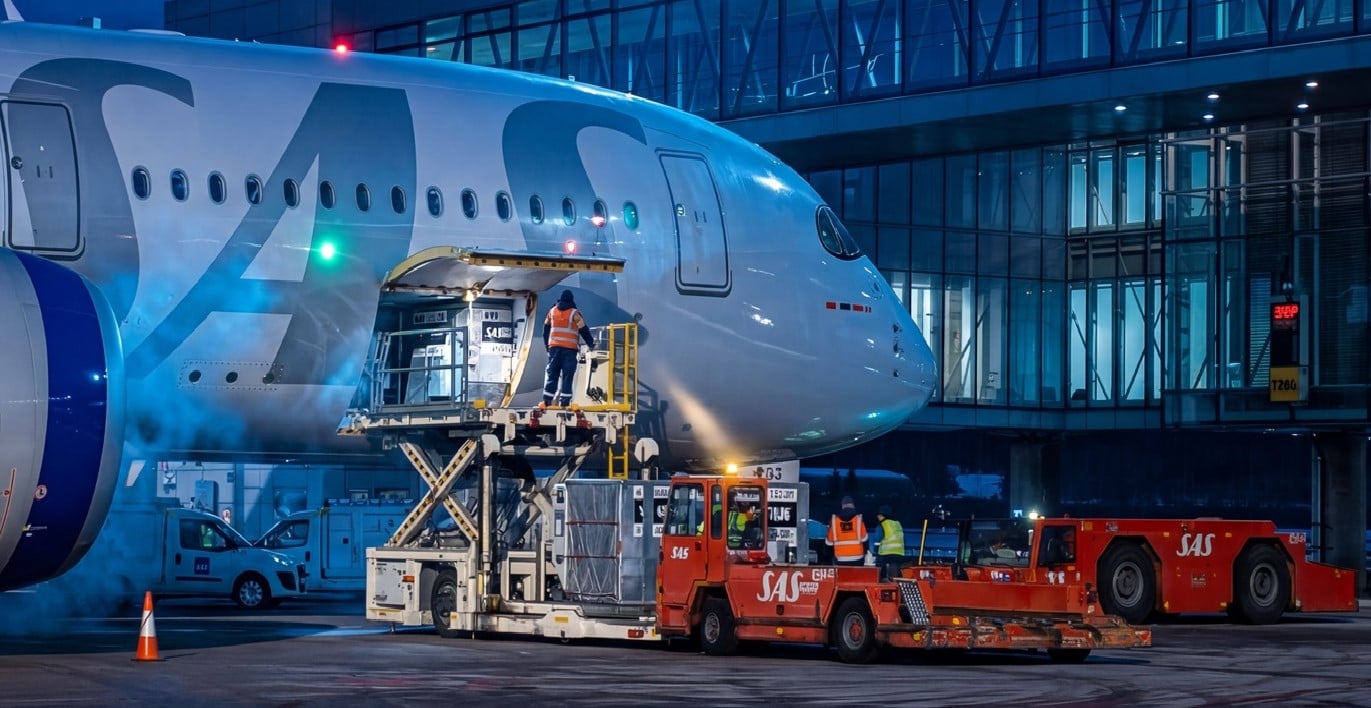
The big difference between scheduled airfreight and express courier overnight transport is frequency. No express courier has as many direct departures within to and from Scandinavia as SAS – in fact nor has any other airline. SAS Cargo has access to every aircraft in the SAS fleet. This means that goods can move just as often and to as many destinations as passengers.

If a European shipment is ready to send at 08:00, it will probably arrive, at Stockholm for example, before lunch the same day. And if a shipment is ready for dispatch overnight, it will go on the first morning flight.

The reason for choosing airfreight nowadays is invariably savings - both time and money. In short, we can say: Let airfreight seize the day.