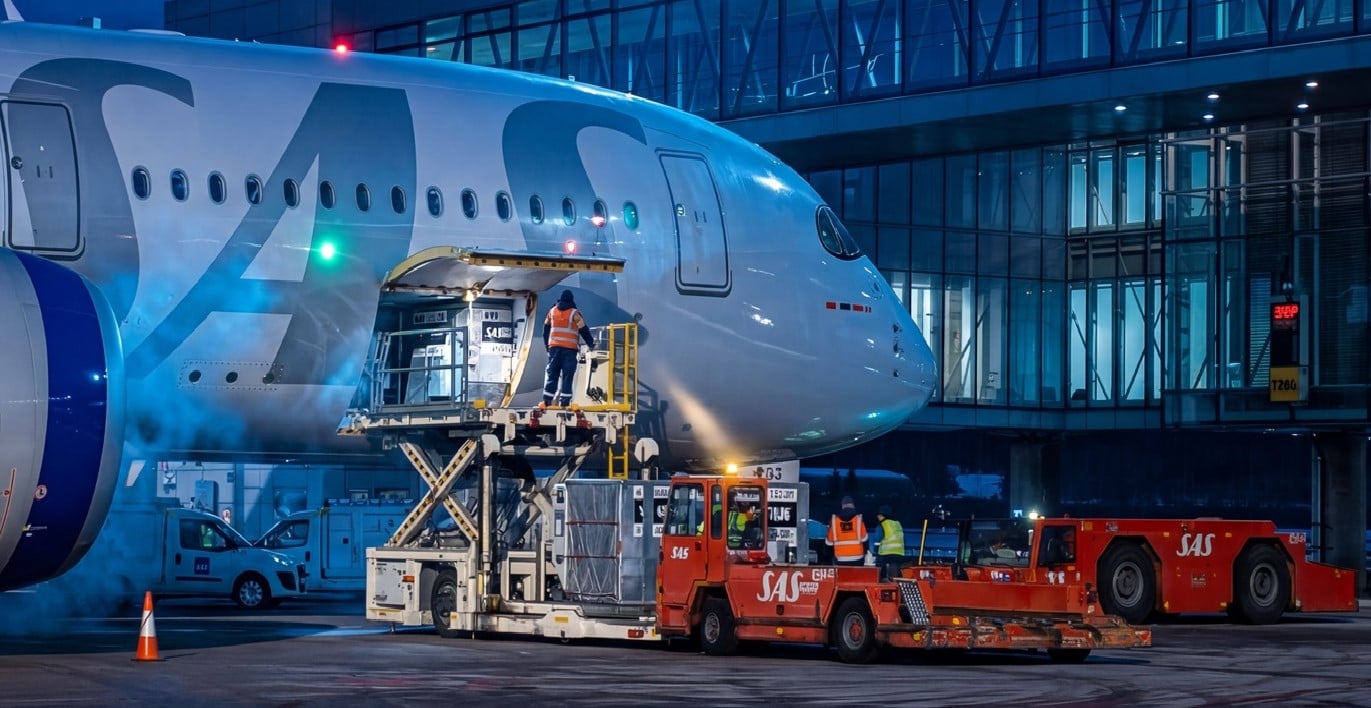
They have undeniable pedigree, and they are simply state-of-the-art aircraft providing many benefits enjoyed by SAS passengers, staff and crew, and many in the air cargo business. Today SAS Cargo has access to A330-300 aircraft and A340-300 aircraft to assure its customers of secure airfreight shipments on long-haul flights.
The two aircraft models share a highly sophisticated wing design, a wide and spacious cabin, and the latest in flight technology. A330-300 models fly distances of up to 10 200 km, and the long-range A340-300 models fly up to 13 500 km.
Seen from the outside, the two Airbus models are distinguished immediately by the number of engines: two on the A330 and four on the A340. The two versions share a wide commonality in aircraft spares and components, as well as qualifications required in the workforce, both in the cockpit and cabin, and among technicians on the ground. Thus after only brief periods of pilot training, airlines can attain a high rate of cockpit crew utilisation. Pilots may readily move from a short-range aircraft like the A320, for instance, to a long-range aircraft like the A340, and vice versa.
An electronic joystick
Among the special characteristics of the Airbus family of aircraft is the famous “fly by wire” technology in place of the “old steering rod”. It is actually a joystick with which the pilot controls the aircraft, aided by a series of computers that help maintain optimal performance in all situations. The pilot “talks” to the Airbus through a computer – instead of a complicated and heavy series of hydraulics transmitting the pilot’s physical instructions mechanically to the control surfaces, it’s all done electronically. The net result is easy, safe and smooth flying, combined with optimal operational economy.
Not so thirsty
Two or four engines: either concept has it particular strength. Four engines consume more fuel, but the longer-range aircraft can operate without the restraints of the two-engine aircraft, which must be no more than 180 minutes from a landing alternative.
The two-engine model, of course, makes less demand on fuel. The A330 can carry almost the same number of passengers as the four-engine A340 and is therefore ideally suited for dense and shorter routes. SAS makes most use of the A330 on its North Atlantic routes.
With both models, the SAS fleet includes hyper-modern aircraft with the most environmentally friendly engines available. They “drink” less fuel and emit far less gasses than older-generation aircraft engines.
Excellent for cargo
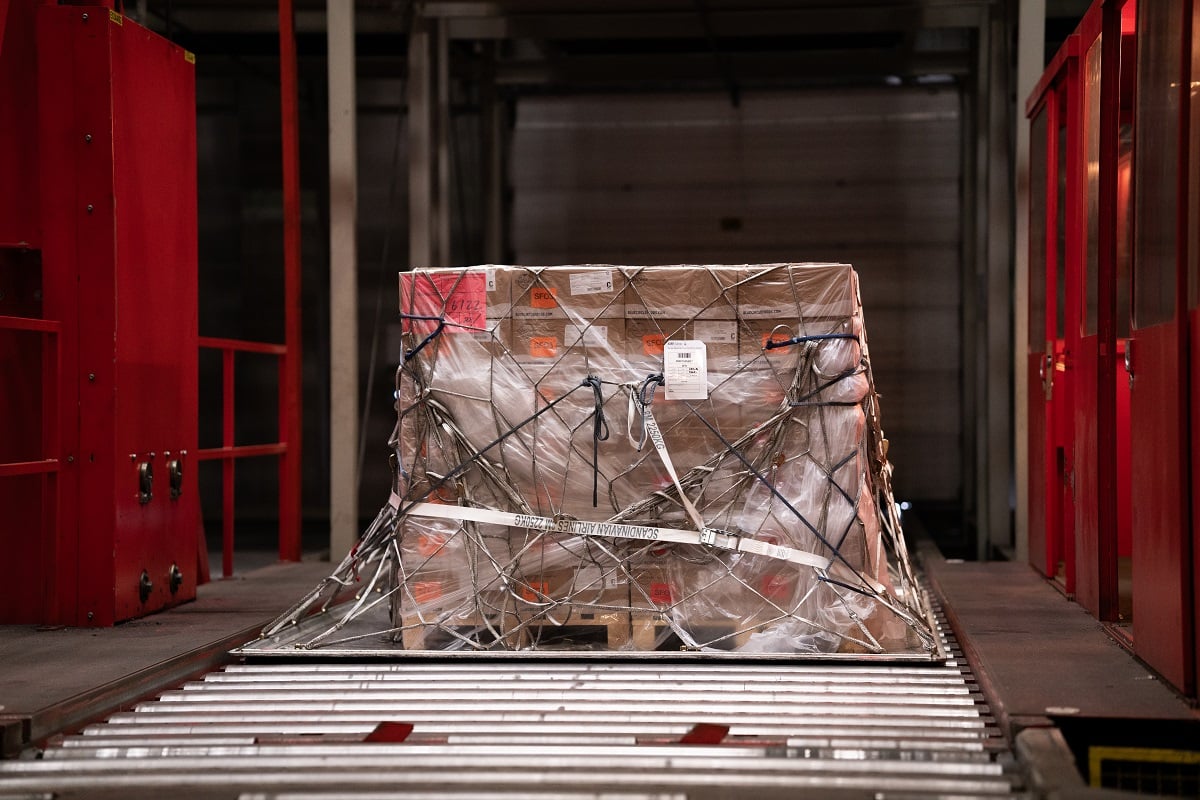
The A330/A340 aircraft takes 16-20 tonnes of cargo depending on passenger load, weather, etc.. Thus the Airbus aircraft are ideally suited to satisfying the demand for high-volume cargo transport between Europe and the Far East, and over the North Atlantic.